
Accelerating Production & Optimizing Engagement: The Power of AI for Visual Content
2024-03-25
In the current digital landscape, visual content serves as the cornerstone for engaging audiences and building brand identity. From social media posts and advertising banners to product videos, visual content commands attention, conveys messages effectively, and elevates the user experience. However, crafting high-quality visual assets often consumes significant time and resources. This is precisely where Artificial Intelligence (AI) enters the frame, fundamentally shifting the entire creative paradigm.
At Reputyze Asia, our deep industry experience confirms that AI-driven tools are empowering businesses to produce impactful visual content at scale. By automating design tasks, personalizing content, and optimizing workflows, AI for visual content is no longer just a support tool—it is a vital strategy for breaking through in the competitive Marketing industry.
Why Visual Content Needs an AI Upgrade?
In an era where user attention is the most valuable asset, a compelling image or video can make all the difference. However, producing a high volume of premium visual content to maintain a presence across media channels demands complex processes and specialized teams. Faced with time and budget pressures, many Marketers have sought automation solutions. AI has emerged as the answer to this equation, enabling them to create more content, faster, and more effectively.
How is AI Reshaping the Visual Content Creation Game?
AI is redefining the entire visual content creation workflow by automating and enhancing four key aspects:
1. Automating Graphic Design
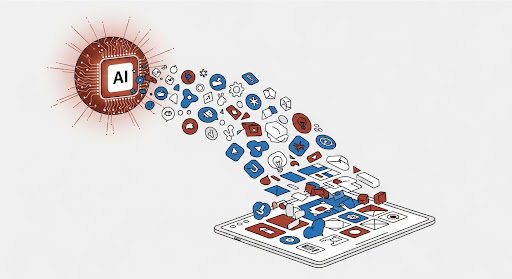
One of the most significant advancements in AI is its ability to automate graphic design. AI-powered design platforms like Canva, Crello, and Adobe Spark allow users to generate professional-grade graphics without needing deep design expertise. These tools offer a vast array of templates, customizable layouts, and AI-driven suggestions to streamline the design process. For instance, an e-commerce business can leverage AI to rapidly generate social media posts, ad banners, and attractive product images.
2. Video Creation and Editing at Scale
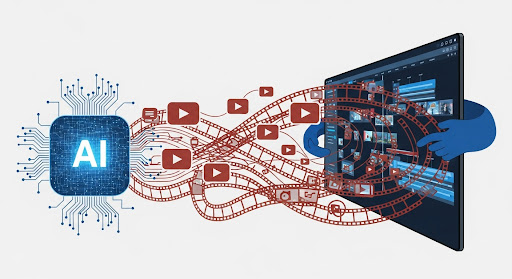
Creating engaging videos typically drains resources, but AI is making large-scale video production and editing increasingly accessible. Tools such as Pictory, Magisto, and Animoto automate many facets of video creation, from editing raw footage to selecting music and adding transitions. For example, an AI tool can automatically generate a product demo video by extracting highlights from raw footage, adding captions, and selecting an appropriate background track.
3. Generating Original Images and Art from Text AI
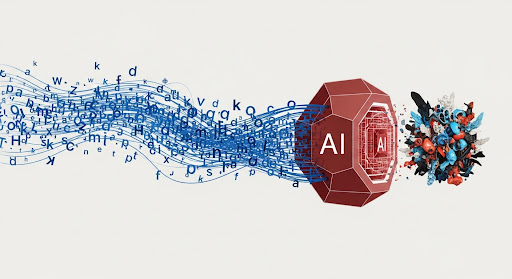
also possesses the capability to generate entirely new images and artworks from scratch using machine learning models like DALL-E, Midjourney, and DeepArt. These AI models can create unique visuals based on text descriptions, providing businesses with a unique method to produce custom visual content for marketing campaigns, branding, and product design.
4. Personalizing Visual Content
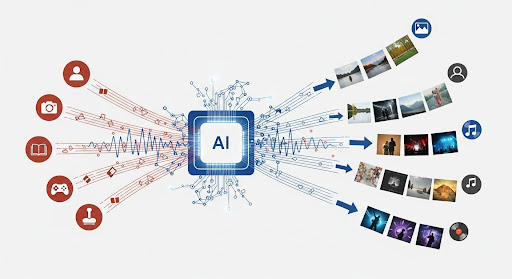
AI is elevating the ability to deliver personalized visual content based on individual user preferences and behaviors. AI-based personalization tools analyze data such as demographics, browsing history, and past customer interactions to craft visual content tailored to each user. This can include personalized product recommendations, targeted social media ads, and customized website banners.
4 Business Benefits of Applying AI to Visual Content
1. Accelerated Content Production Speed
AI-driven tools significantly reduce the time and effort required to create high-quality visual content. By automating tasks such as graphic design, video editing, and image generation, businesses can produce content faster and at scale. This speed enables Marketers to keep pace with the demands of Social Media and Digital Marketing, ensuring they consistently deliver fresh and engaging visual content to their audience.
2. Cost Optimization
AI-supported visual content creation tools are more cost-effective compared to traditional design and production processes. Businesses can avoid the high costs associated with hiring professional designers or editors by utilizing AI tools. This allows businesses to reallocate resources to other areas of Marketing while still maintaining high-quality visual standards.
3. Maintaining Brand Consistency
Maintaining brand consistency across multiple marketing channels is essential for building recognition and trust. AI-based design tools make it easy to create consistent visual content across social media platforms, websites, emails, and advertisements. For example, AI tools can automatically apply the brand’s specific color palette, fonts, and logos, ensuring all visual content strictly adheres to the corporate identity.
4. Elevating User Experience with Personalized Content
AI-driven tools allow businesses to create personalized visual content at scale, thereby improving engagement and relevance. Personalization is key to building stronger relationships with customers, and AI can analyze user data to deliver visual content that aligns with the interests and behaviors of each individual.
Challenges and Solutions: Synergizing AI with Human Creativity
While AI delivers numerous benefits, there are challenges that must be considered:
Creative Limitations: AI-based design tools can automate many aspects of content creation, but they may lack the ability to produce designs that are highly creative or possess deep emotional resonance.
Data Privacy Concerns: AI-based personalization relies heavily on user data, which raises privacy concerns. Businesses need to ensure compliance with data protection regulations such as GDPR and CCPA, while being transparent with users about how their data is utilized.
To address these challenges, the key is to combine AI with human creativity. Use AI tools to streamline the technical aspects of design and production, but rely on human creativity to develop unique concepts, craft compelling messages, and create visual products that truly stand out.
Conclusion: It’s Time to Strategically Harness the Power of AI
AI is transforming how we create visual content by automating design tasks, enhancing video production, generating unique imagery, and enabling personalized experiences at scale. To fully leverage AI’s potential, businesses must balance automation with human creativity, use high-quality data for personalization, and continuously test and optimize visual content to improve performance.
At Reputyze Asia, we believe that the fusion of Technical Thinking & Creativity creates breakthrough Marketing solutions. We will help you utilize AI as a powerful instrument to optimize your visual content strategy, while ensuring your content always retains a distinct “breath” and personality to touch the hearts of your customers.
If you are looking for a partner to solve the challenges of the AI era and optimize your content strategy, do not hesitate to contact us today.
Related Journals