Digital Media in Business: Building Strategy & Optimizing Production to Accelerate Revenue Growth
Date: 2025-01-25

In a rapidly changing business world, where everything is closely connected via the internet, Digital Media in business is no longer a novelty but a core element determining the success or failure of every company. Whether you are a major corporation or a burgeoning small enterprise in Vietnam, or seeking opportunities in demanding markets like the US, Japan, or South Korea, understanding and applying an effective digital media strategy is the key to maintaining a foothold and achieving expansive growth.
I. What is Digital Media and Its Impact on Business?
1. Defining Digital Media
Digital Media refers to media activities executed using digital devices. Essentially, it is a term encompassing any form of communication used via electronic devices for transmission and distribution.
Digital media is any content you can create, view, share, or distribute via electronic devices. It encompasses a vast array of formats: from the text you are reading, the photos you see, the audio you hear, to the videos you watch and interact with. Thanks to the internet and technological advancement, accessing and disseminating this content has become easier than ever. We interact with digital media daily, whether scrolling through social media on a phone, streaming a movie, or reading online news.

2. The Difference Between Digital Media and Traditional Communication
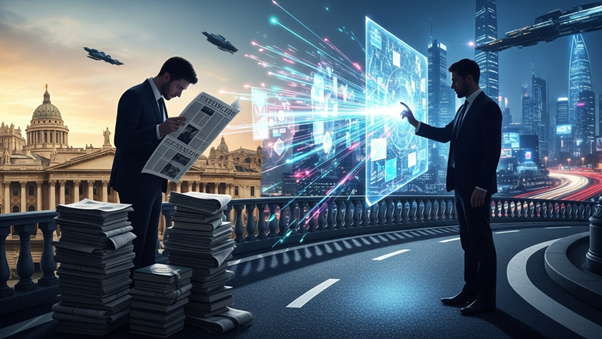
Before the digital media boom, businesses primarily relied on traditional (analog) media such as print newspapers, magazines, radio, and television. While these still hold a certain role, Digital Media significantly surpasses them in several core aspects:
- Distribution: Digital Media can be distributed instantly and globally via the internet, whereas traditional media is limited by geography and the time required for physical production and transport.
- Interactivity: Digital Media enables two-way communication and direct interaction with the audience (comments, shares, online chats). Conversely, traditional media is primarily one-way, with limited capacity for immediate feedback collection.
- Measurability: One of the greatest advantages of Digital Media is the ability to track and accurately measure performance in real-time. Businesses can know how many people viewed the content, how they interacted, and what the conversion rate is—something virtually impossible with traditional media.
- Flexibility and Updatability: Digital Media content is easily edited, updated, or removed. In contrast, traditional content (e.g., a printed book) requires a costly re-production process if changes are needed.
- Environmental Impact: Digital Media helps reduce physical waste from products and packaging, although it consumes electronic energy. Physical communication generates waste during both production and consumption.
3. Why is Digital Media Important for Modern Businesses?
In an increasingly competitive and demanding market, Digital Media Production is not just an investment but a vital factor for business breakthroughs and brand distinction. Digital media has completely transformed how we share information, learn new things, and entertain ourselves. Its influence is immense, impacting all sectors including entertainment, education, and especially business.
- Global Reach and Market Expansion: Digital media enables content to spread widely thanks to the internet and digital devices. This has revolutionized how businesses connect with customers, making the exchange of ideas and information faster and easier. Imagine a business in Vietnam can now reach potential customers in the US, Japan, or South Korea without needing a direct physical presence.
- Unlocking New Business Opportunities: Digital media provides new avenues for businesses to reach and interact with potential customers through engaging content. This is not just about selling; it’s about creating valuable experiences to attract customers. Thanks to smart online advertising campaigns and high-quality digital media production, even small companies can stand out next to major brands, making the market more vibrant and diverse.
- Customer Interaction and Connection: Digital Media has fundamentally changed how businesses communicate and interact with customers. Instead of relying solely on traditional channels like phones or mail, businesses can now engage directly via social media platforms, email, and online chat services. This two-way communication not only expedites question resolution but also provides deep insights into customer preferences, needs, and behaviors.
- The Power of Big Data Analytics and Personalization: The use of Big Data allows companies to tailor marketing campaigns with greater precision than ever before. By analyzing massive amounts of data, businesses can understand customer behavior and preferences, thereby creating highly personalized and significantly more effective marketing strategies.
- Enhancing Learning and Entertainment Experiences: Beyond business, digital media has also changed how we learn and entertain ourselves. With the development of e-learning platforms and online movie/music streaming services, the way we acquire knowledge and relax has changed dramatically.
III. The Three Pillars of Digital Media Strategy: Owned, Paid & Earned Media
In today’s information landscape, digital media is no longer limited by old methods but offers numerous channels for businesses to connect with customers. Below are the three main types, each playing a distinct role in the overall digital marketing picture.
1. Owned Media: Building Brand and Proprietary Platforms
Owned Media consists of all the content or digital assets that your business has full control over. This includes your company website, blog, and official social media pages. In this era, these assets are your “home” on the internet—a direct channel to reach your customers. Creating high-quality content on these platforms allows you to tell your brand’s story and interact with customers in your own way.
For instance, a website is more than just an electronic catalog; it’s a dynamic platform to showcase products, services, and core company values. Similarly, social media pages (like Facebook and TikTok, popular in Vietnam, or LinkedIn for international markets) provide space to connect through engaging posts, stories, and videos. To achieve effective Digital Media Production on Owned Media, you need to ensure brand consistency and optimize for search engines (SEO) to attract organic traffic.
2. Paid Media: Enhancing Visibility and Reaching the Right Audience
Paid Media refers to all forms of online advertising that you pay for. It is highly diverse, ranging from display ads on Google search results, banner ads on other websites, to social media ad campaigns or collaborations with influencers (influencer marketing). Paid Media is crucial for driving customers to your Owned Media channels and increasing brand visibility across digital platforms.
The main goal is to place your content where potential customers are most likely to see it, whether they are on social media, searching for information, or browsing the web. A clear example of effectiveness is mobile YouTube advertising’s ability to capture viewer attention 84% higher than traditional TV commercials. Digital marketing via Paid Media allows for precise targeting and clear performance measurement. For example, search advertising helps your business appear at the top positions when users search for keywords related to your products or services. When performing Digital Media Production for Paid Media, you need to focus on creating instantly appealing content with a strong Call-to-Action (CTA).
3. Earned Media: Building Credibility from Organic Spread
Earned Media is considered the most authentic form of marketing. It includes everything your brand receives through word-of-mouth, which could be via social media, customer reviews, press coverage, or even television mentions. This type of media is neither bought nor owned; it must be “earned” by generating genuinely captivating, high-quality, and impactful content that people voluntarily share.
Earned Media helps your brand message spread far wider than your direct reach, providing an authenticity and trustworthiness that Owned or Paid Media can hardly match. A specific example is when a blog or industry influencer mentions your product/service, or when your content goes viral on social media; your brand reputation and awareness can increase significantly. To conduct Digital Media Production for Earned Media, you need to focus on creative, valuable content with the potential to stimulate organic interaction, making users want to share it.
In summary, it is vital for businesses to stay updated and agile, optimally leveraging the combination of these three media types to effectively reach and engage customers. Message and brand image synchronization across all three channels creates synergy, maximizing the effectiveness of the entire digital media strategy.
IV. What Businesses Need to Prepare to Lead the Current Digital Media Wave
To succeed in this connected world, businesses must integrate their digital media strategy into all business operations.
1. Develop a Comprehensive Digital Media Strategy
You need to develop a comprehensive digital media strategy that is synchronized with your overall business objectives and direction. This includes building a strong online presence, creating compelling content, and maximizing social media platforms to connect with potential customers. In particular, investing in high-quality Digital Media Production across various formats (video, podcasts, infographics) is crucial for attracting and retaining customers in the long term.
2. Stay Updated and Ahead of Market Trends
To truly stand firm and achieve success in the continuously evolving digital media environment, businesses need a clear strategy. This involves integrating Digital Media into the overall business plan and proactively overcoming challenges. Most importantly, it requires continuous updating and anticipating market trends.
Businesses must build a strong online presence, create quality content, and maximize social platforms. At the same time, they must be prepared to face data security issues and constant technological change. Investing in research on advancements like AI, VR, and AR to optimize Digital Media Production, from content personalization to creating immersive experiences, is essential. Adapting to new content consumption behaviors (e.g., prioritizing short videos, mobile content) and developing team skills are key to maintaining a competitive edge and leading in this transformative digital environment.
3. Confront and Overcome Challenges
While digital media offers countless benefits, implementing it into a business strategy can also come with several challenges. It is crucial to identify and address them:
- Data Security and Privacy: Ensure robust security measures and compliance with data privacy regulations, which are increasingly stringent globally.
- Continuous Technology Updates and Rapid Adaptation: The digital world changes daily; you need to constantly monitor technological advancements and be ready to adjust your strategy so as not to be left behind.
- Developing and Training Specialized Teams: Ensure your team has the necessary skills and knowledge to navigate the complex digital landscape.

V. Conclusion
In conclusion, digital media in business is no longer an option but a crucial path to maintaining competitiveness and sustainable growth. From reshaping communication and optimizing digital marketing to leveraging cutting-edge technological trends like AI and VR/AR, the influence of digital media is undeniable. Building a comprehensive digital media strategy, with a special emphasis on high-quality Digital Media Production, will help businesses not only adapt but also lead in this increasingly connected business world.
In a highly competitive market, the lack of an effective Digital Media strategy can cause brands to miss opportunities. Are you struggling to catch up with new trends and optimize your content? Reputyze Asia understands these concerns. With a combination of creativity and technical expertise, we are ready to partner with your business to build a tailored Digital Media Production solution. Let us help your brand enhance engagement and create sustainable value in the market.
Related Journals