
How to Optimize E-Commerce Inventory Management to Maximize Profitability in 2025
Date: 2025-06-05

For DTC (Direct-to-Consumer) and e-commerce brands, inventory isn’t just physical goods on shelves—it’s cash in disguise. Inventory can either be your most valuable asset or your biggest liability. The difference lies in how you manage it.
Many brands struggle with unprofitable SKUs, excessive storage costs, and frequent stockouts. The root cause is often poor inventory management, which gradually erodes profit margins.
This guide explores three core areas to turn inventory from a burden into a competitive advantage: what e-commerce inventory management is, how to optimize it effectively, and which software tools can help you control and scale operations.
I. What Is E-Commerce Inventory Management & Why Does It Matter?
1. What is E-commerce inventory management?
E-commerce inventory management is the systematic process of sourcing, storing, and tracking online-sold products. It spans demand forecasting, warehouse operations, logistics, and financial reporting.
More than theory, inventory management is a business lifeline—impacting profitability and cash flow stability. Done right, it ensures you meet customer demand while avoiding excess stock that ties up working capital. The key is balancing between preventing stockouts and avoiding overstock.

2. Hidden Costs of Poor Inventory Management
“Inventory distortion”—simultaneous stockouts and overstocks—costs e-commerce brands over $818 billion annually. Roughly 56% comes from out-of-stock issues, while 44% results from overstock. Online stores average 8% stockout rates while holding 20–30% more inventory than needed.
Inventory inefficiencies are not minor inconveniences—they’re existential threats as your business scales.
II. Common Inventory Challenges in E-Commerce
As businesses grow, small inefficiencies turn into major bottlenecks:
Supply Chain Disruptions: Global volatility, delayed shipments, and unstable logistics make fulfillment unpredictable.
Multichannel Selling Complexity: Managing inventory across multiple platforms (Shopify, Amazon, Shopee, Lazada, etc.) without real-time sync causes errors and customer dissatisfaction.
Soaring Warehousing Costs: Brands must balance SKU variety and warehouse location to minimize costs while meeting demand.
Returns & Reverse Logistics: Poor handling of returns leads to accounting mismatches and inaccurate inventory records.
Cash Flow Constraints: Growth requires stock, but stock requires cash—which gets locked up in unsold inventory. Transparency is key, and often lacking without specialized tools.
III. 4 Proven Inventory Strategies for E-Commerce Brands
Success lies in a tailored mix of inventory tactics suited to your business needs:
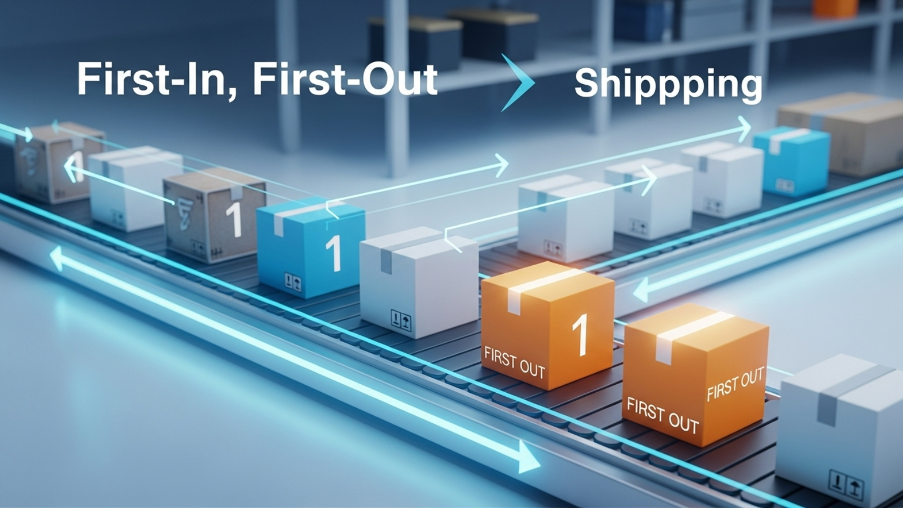
1. FIFO (First-In, First-Out)
Ensures the oldest stock is sold first. Critical for perishable or time-sensitive products.
Operational tips:
Organize warehouses for FIFO flow
Train staff on proper rotation
Clearly label products with receive dates
Accounting benefits:
Accurate COGS (Cost of Goods Sold) per SKU
Proper landed cost allocation (taxes, duties, freight)
2. ABC Analysis
Classifies inventory based on importance:
A-items: 20% of SKUs = 80% revenue → highest control
B-items: 30% of SKUs = 15% revenue → moderate oversight
C-items: 50% of SKUs = 5% revenue → minimal intervention
Prioritize resources where impact is greatest, while maintaining visibility across the full inventory.

3. Just-in-Time (JIT)
Receive stock only when needed. Ideal for stable-demand items.
JIT best practices:
Frequent small orders
Strong supplier partnerships
Emergency backup plans
Maintain minimal safety stock

4. Preventing Dead Stock
Dead stock ties up capital and warehouse space.
Prevention tactics:
Early warning reports on slow-movers
Conservative purchasing for new SKUs
Pre-order campaigns to gauge demand
Lifecycle reviews & obsolescence thresholds
Liquidation playbooks: bundles, flash sales, staff perks
IV. How to Implement an Inventory Management System (IMS)
Rolling out a new IMS requires careful planning, data hygiene, and internal buy-in.
Step-by-step guide:
Define clear KPIs (e.g., 50% stockout reduction, 25% turnover improvement)
Clean your inventory data before migration
Phased rollout: Start with core functions before scaling to advanced features
Involve stakeholders across operations, finance, and sales
Document SOPs for all inventory-related tasks
Train teams based on specific roles
Plan post-launch support: internal champions and vendor support channels

Pro Tip: Many failures stem from poor change management, not tech limitations.
V. Conclusion: Turn Inventory into a Profit Engine
In today’s dynamic e-commerce landscape, real-time visibility and control over inventory are vital. While spreadsheets may have worked in the past, modern brands need automated inventory software to:
Sync stock across channels
Forecast demand
Automate reorders
Minimize waste
Improve cash flow
At Reputyze Asia, we help brands choose and implement best-fit inventory tools to streamline operations and increase profitability.
Let’s transform your inventory from liability to strategic asset. Reach out today to get started.
Related Journals