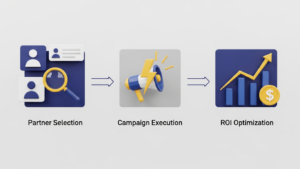
Influencer & Vendor Management: The Golden Key to Effective Marketing and Operational Excellence
Date: 2024-02-25

In today’s business landscape, organizations can no longer rely solely on internal resources to scale sustainably. External partners—especially influencers and vendors—play a critical role in both marketing and operations. When managed well, these partnerships enable brands to expand their reach, enhance performance, and optimize resources. Without a clear and professional management framework, however, businesses may face unnecessary risks and inefficiencies during execution.
I. Why Influencer & Vendor Management Matters
Influencers today are far more than social media personalities; they have become strategic partners within a brand’s broader marketing ecosystem. Their ability to communicate messages authentically and with emotional resonance gives them a powerful influence over consumer decision-making. Statistics show that 93% of marketers now collaborate with influencers in various forms, and audiences reached through these partnerships often demonstrate stronger relevance and higher conversion potential compared to traditional advertising channels.
Similarly, vendors—specialized individuals or organizations contracted to deliver expert functions—play an essential role in a company’s operational backbone. Partnering with vendors allows businesses to access high-level expertise without the need to expand internal headcount. In fact, over 40% of the workload across modern enterprises is now handled by non-permanent external partners.
To fully unlock the value of these two groups, businesses must establish a professional, unified management process rather than working reactively on a project-by-project basis or relying on informal relationships. A structured approach not only reduces friction but also strengthens collaboration, consistency, and long-term effectiveness.
II. Influencer Management: It’s About Building Relationships, Not Just Campaigns
Managing influencers is far more than coordinating posts—it is a complex discipline that demands clear strategy, structured planning, and agile execution.
1. What Defines a Professional Influencer Marketing Manager?
Acting as the critical bridge between the brand and influencers, an Influencer Marketing Manager ensures every collaboration is effective, consistent, and mutually valuable. Their responsibilities span the full lifecycle of a campaign, including:
Campaign development: Setting clear objectives for each phase—whether it’s boosting brand awareness, driving conversions, or accelerating sales.
Influencer selection: Identifying and evaluating the right partners based on niche relevance, audience profile, engagement levels, and campaign budget.
Execution and oversight: Working closely with influencers to align on content requirements, posting schedules, and performance KPIs. This includes reviewing and approving content to ensure brand coherence across every touchpoint.
Performance evaluation: Continuously tracking campaign metrics, analyzing results, and generating reports to optimize current performance and inform future strategy.
2. Strategies for Building Long-Term Influencer Relationships
Instead of constantly searching for new influencers for every campaign, brands should prioritize long-term partnerships. This approach not only reduces operational time and cost but also deepens trust and credibility with the target audience.
To cultivate strong, lasting relationships, brands should focus on several core principles:
Brand–Influencer Value Alignment
Choosing influencers whose values, perspectives, and lifestyle align with the brand is essential. This alignment forms the foundation for long-term collaboration and ensures consistency in storytelling.
For example, an influencer advocating for sustainable living is naturally a stronger fit for a brand committed to slow fashion than one who does not share the same ethos.
Respect for Creative Autonomy
Influencers are professional content creators. Empowering them to express creativity—within a well-defined strategic framework—leads to more authentic, audience-relevant content. It also strengthens the relational dynamic.
In fact, 77% of influencers say they are more likely to maintain long-term partnerships with brands that respect their creative freedom, often valuing this even more than financial incentives.
Transparent and Fair Compensation
Timely, clear, and fair payment practices signal professionalism. Delayed or ambiguous compensation processes can erode trust, strain partnerships, and ultimately harm the brand’s reputation. Transparent remuneration is therefore a cornerstone of sustainable influencer collaboration.
III. Vendor Management: Optimizing Operations and Minimizing Risk

Just like influencer management, effective vendor management requires a clear and detailed process. A well-structured vendor strategy ensures that external partners operate smoothly and consistently contribute to your business goals.
1. The Professional Vendor Management Lifecycle
A strong vendor management framework typically involves five key stages:
Step 1: Sourcing and selection
Choosing the right vendor from the outset is critical. Beyond pricing, evaluate expertise, capabilities, technologies used, and cultural alignment with your organization.
Step 2: Contracting and relationship setup
Establish clear Service Level Agreements (SLAs) that define expectations, timelines, and costs. This is also the stage to set up onboarding workflows and collect essential payment and compliance information.
Step 3: Performance management and collaboration
Monitor agreed-upon KPIs to ensure vendors deliver consistently. Maintain open lines of communication, provide timely feedback, and foster a collaborative environment that encourages continuous improvement.
Step 4: Risk management and compliance
Identify potential risks—ranging from regulatory changes to cybersecurity threats—and develop mitigation strategies. Ensure vendors comply with data security standards, labor regulations, and ethical guidelines.
Step 5: Renewal, termination, and improvement
At the end of each contract term, evaluate vendor performance to decide whether to renew or discontinue the partnership. If ending the contract, implement a structured offboarding process to retrieve data, revoke access, and return any company-owned assets.
2. Common Challenges and Effective Solutions
Many organizations struggle with vendor operations due to:
Over-reliance on manual processes:
Paperwork and spreadsheets are time-consuming, error-prone, and limit the ability to make data-driven decisions.
Lack of clear accountability:
Without a formal management framework, delays, missed payments, or forgotten contract renewals become common.
Poor communication:
Unclear expectations at the start often lead to misunderstandings, unexpected workloads, and dissatisfaction on both sides.
To overcome these challenges, businesses must implement formalized processes and define clear roles and responsibilities across teams.
3. Technology and Digital Solutions: The Catalyst for Effective Management
In today’s landscape, managing influencers and vendors through manual spreadsheets is no longer sustainable. Technology platforms have become essential tools for streamlining processes and enhancing operational efficiency.
An ideal partner-management platform consolidates multiple functions into a single system. Key capabilities include:
- Discovery and selection: Tools that help identify the right influencers or vendors based on vertical, audience size, geographic market, or budget.
- Project management: Centralized dashboards that provide visibility into campaign status, timelines, and budgets.
- Global payment processing: Automated cross-border payments that eliminate delays and reduce challenges related to exchange rates or transfer fees.
- Secure document storage: A centralized repository for contracts, briefs, compliance documents, and essential project assets.
Adopting these technologies reduces administrative overhead, minimizes human error, and allows businesses to focus on fostering strategic, high-value relationships.
IV. Building Partnerships for Long-Term Value
Strategic management of influencers and vendors enables organizations to build a diverse and resilient partner ecosystem. Beyond operational efficiency and cost optimization, it equips businesses with the agility needed to adapt to market shifts.
With the right combination of structured processes and smart technology, companies can transform transactional interactions into long-term partnerships—creating shared value and sustained growth.
At Reputyze Asia, we believe innovation happens at the intersection of technology and creativity. Let’s explore how we can help your organization cultivate strong, future-ready partnerships.
Related Journals